
 All products



















Drives & Motor Control
Variable Speed Drives
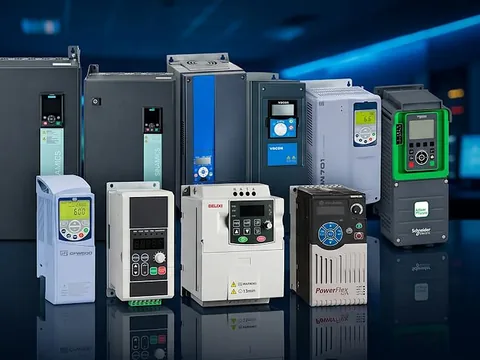
AC drives for speed and torque control of electric motors. 27 products from 6 brands.
About variable speed drives
A variable speed drive (VSD), also called a variable frequency drive (VFD), inverter or AC drive, controls the speed and torque of an AC motor by changing the frequency and voltage it supplies. Instead of running a motor at full speed and throttling the output with valves, dampers or mechanical gearing, the drive matches motor speed to what the process actually needs. On centrifugal pumps and fans this usually cuts energy use substantially, and on every application it gives a soft start, adjustable acceleration and deceleration, and motor protection. Drives are matched to the motor's current and supply voltage, and are available from fractional-kilowatt units up to large drive systems.
This page lists 27 drives from ABB, Allen-Bradley, Danfoss, Eaton, Schneider Electric and WEG, from compact machine drives to general-purpose, process and modular drive systems. Use the brand shortcuts or the filters to narrow the list by brand and drive type, open a product for its information sheet, and add the models you need to one quotation request.
All variable speed drives

Allen-Bradley
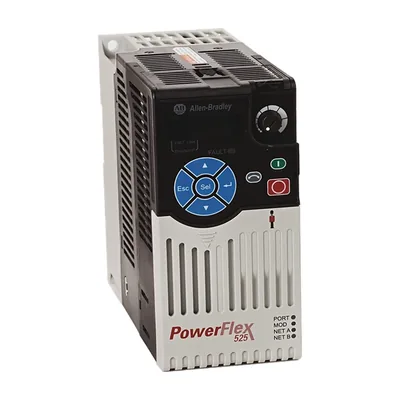
Allen-Bradley PowerFlex 525
Compact AC drive
View product: Allen-Bradley PowerFlex 525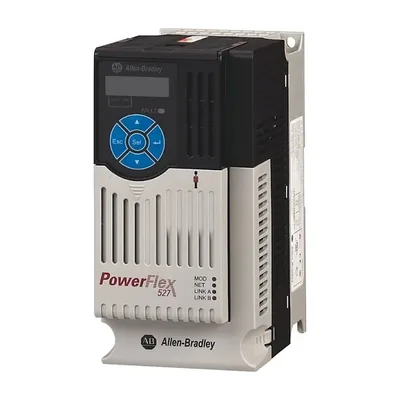
Allen-Bradley
Allen-Bradley PowerFlex 527
Compact AC drive
View product: Allen-Bradley PowerFlex 527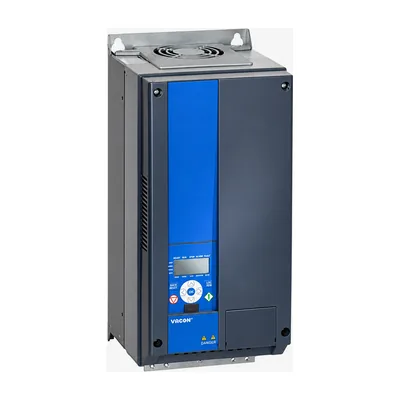





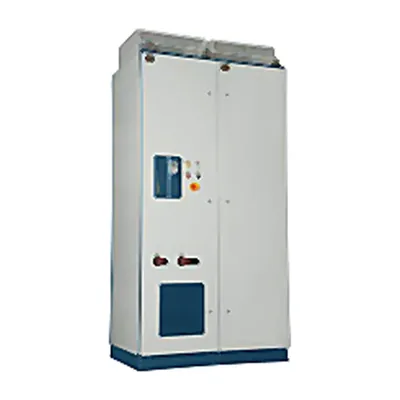
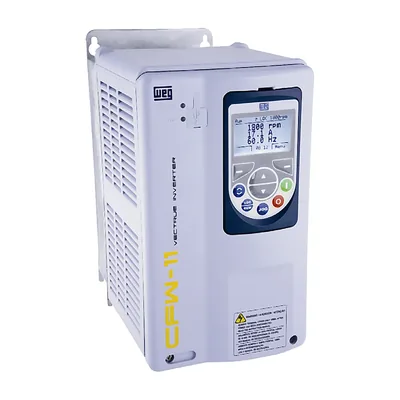
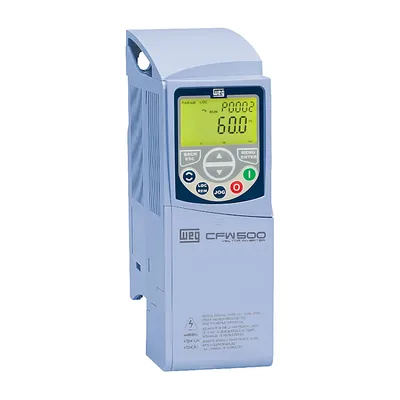
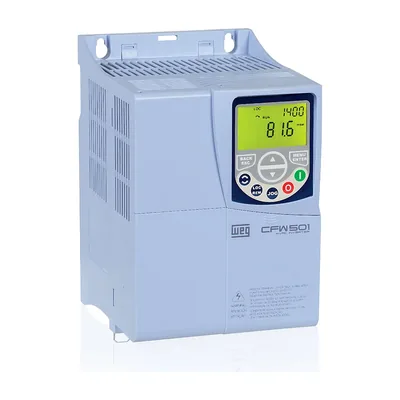

No products match these filters.
Try removing a filter or searching by model number. Can’t find what you need? Contact us with the part number.
Buying guide
Choosing a variable speed drive
The right drive depends on the motor, the load and where the drive will be installed. These are the points to check before you request a quotation.
Motor rating and supply
Size the drive by output current, not only by kilowatts: its rated current must cover the motor's full-load current from the nameplate. Confirm the supply voltage and number of phases, for example 230 V single-phase or 400 V three-phase input, and whether the motor is wired for that voltage.
Load type and duty rating
Drives are commonly rated for normal duty and heavy duty. Normal duty suits variable-torque loads such as centrifugal pumps and fans. Heavy duty suits constant-torque loads such as conveyors, mixers, extruders and positive-displacement compressors, which need more short-term overload capacity, so the same drive frame is rated for a smaller motor.
Control method
Scalar (V/f) control is enough for most pump and fan applications. Sensorless vector control gives better torque at low speed and steadier speed under changing load. Closed-loop control with an encoder is used where precise speed or torque is needed, such as hoisting, winding and positioning.
Environment and enclosure
Check the ambient temperature and altitude, as drives are derated above their rated limits. IP20 and IP21 drives are designed to be installed inside an enclosure or electrical room, while IP54, IP55 and IP66 drives can be mounted closer to the machine. Allow the clearances the manufacturer specifies for cooling.
Harmonics, EMC and motor cables
Drives draw non-sinusoidal current from the supply. DC chokes or line reactors reduce harmonic current, and built-in or external EMC (RFI) filters help meet emission limits. With long motor cables, output reactors or dV/dt filters may be needed to protect the motor insulation.
Braking, communication and safety
Loads that must stop quickly or that drive the motor, such as cranes and high-inertia fans, may need a braking chopper and resistor or a regenerative unit. Check which fieldbus or Ethernet protocol the drive must support for your control system, and whether a Safe Torque Off (STO) input is required.
Not sure which drive fits? Send us the motor nameplate details and a short description of the application with your quotation request.
Typical applications
- Pumps
- Fans and HVAC
- Conveyors
- Compressors
- Mixers and agitators
- Extruders
- Hoists and cranes
- Packaging machines
Keep browsing
Other product categories



Ready to price your list?
Send us the products and quantities you need, or describe your application, and our team will prepare a quotation.
- 01 Add products
- 02 Set quantities
- 03 Submit your request